Event 1
Julien's Rooftop Crisis in Montreal

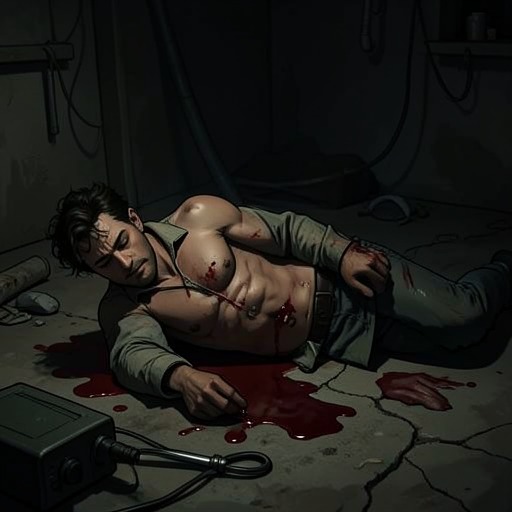
[Julien](entity:character-recall-character-julien-eb70bac9aae1)’s rooftop suicide crisis turns a recent pattern of romantic disappointment and the loneliness of starting over in [Montréal](entity:location-recall-location-montr-al-91e28a4ed696) into an immediate confrontation with death. Standing above the winter streets, he considers jumping, but fear of the pain holds him back; the interruption of his solitude opens the way to a meeting that will alter his course without erasing the vulnerability that brought him there.
## Background and Precipitating Crisis
Julien has recently left Orlando for Montréal, hoping to break out of the routine of a poorly paid nursing job and begin again. The move gives him a new city but not a ready-made community. He has limited French, having completed only two semesters of intermediate courses, and experiences the language difference as part of his isolation. In the cold city, the promise of a fresh start is already entangled with the difficulty of finding affection and belonging.
A week after arriving, Julien uses a gay dating site and connects with [Tyler](entity:character-recall-character-tyler-ea3bef659768), an English-literature student at Université Concordia. Their online conversation seems warm enough that Julien asks Tyler to show him around Montréal. They meet in Rosemont–La Petite-Patrie, talking and laughing in the cold. When Julien takes Tyler’s arm and Tyler does not respond, Julien reads the gesture as evidence that the interest is not mutual. Though they had planned to spend the afternoon together until five, Tyler leaves at two, citing work at a Thai restaurant and the need to pick up a uniform while covering for a sick colleague. For Julien, the shortened date joins a familiar succession of disappointments rather than standing alone.
The rooftop crisis is presented as the culmination of that repetition. Julien frames another rejection as the latest instance of a pattern he believes has followed him since Orlando, and his unmet desire for intimacy has become, in his account, painful and depressing enough to make death seem like an answer. The narrative connects that narrowed outlook to concrete circumstances—repeated rejection, a recent move, and social isolation—rather than to a single dramatic event. At the same time, Julien recognizes that he may be exaggerating the significance of this particular date, even as accumulated disappointment makes it feel decisive.
## The Roof and the Limits of Escape
On the roof of his low apartment building on Papineau Avenue, Julien watches the city lights under the first snow of the season. The weather makes his inward distress feel bodily: the wind lashes his face, the cold flakes slide over it, and loneliness seems to gather into physical pain. Montréal is not simply unfamiliar; its French-speaking environment magnifies Julien’s isolation because his French is limited. The city he entered hoping for a fresh start has become, in this moment, a place where he feels cut off from the intimacy he wants.
The rooftop crisis follows an earlier attempt to find connection in the city’s gay nightlife. On his first night in Montréal, Julien took the metro to Beaudry and passed the Apollon, Unity, and Sky Complex, but did not want to party. He wanted affection and a boyfriend, and doubted that a gay club could provide the decent relationship he sought. He eventually wandered into the Campus, where a dancer offered a three-minute lap dance for twenty dollars; Julien declined and left. The contrast clarifies what he believes is missing: sexual attention for sale is not the same as sustained affection. By the time he stands above the winter streets, his sense that neither dating nor nightlife has brought him closer to belonging has narrowed his vision to an immediate choice between enduring the pain and ending it. Fear of suffering still makes him hesitate. Then a rustle behind him breaks into his thoughts; ready either to flee or confront whoever is there, he turns toward the unexpected interruption.
## Interruption and Aftermath
The rustle behind Julien breaks the rooftop crisis before he acts. He turns, prepared either to flee or to confront the stranger, and finds [Nemrod](entity:character-recall-character-nemrod-96bb79993989), a man whose beauty arrests his attention. The encounter does not make the circumstances that brought Julien to the roof disappear; instead, it redirects his immediate attention toward someone else in danger. When Nemrod is revealed to be injured, Julien’s training as a nurse gives him a concrete responsibility. He takes him inside, lays him on his bed, and prepares sterile dressings and gauze, reasoning that the wound must be disinfected and stitched if it is deep. Nemrod’s claim that the green fluid is blood leaves Julien aware that the stranger is concealing something, but he proceeds with the care he knows how to give.
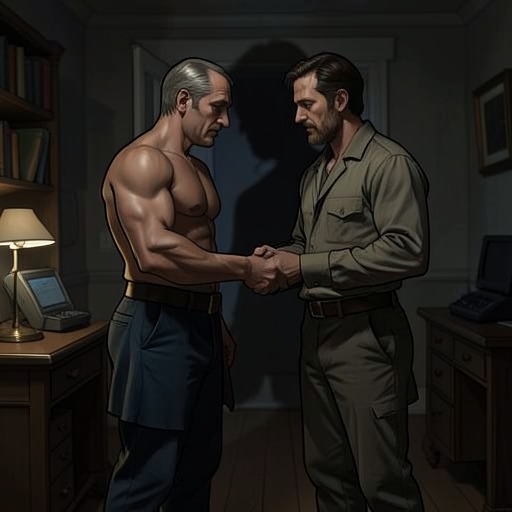
The role reversal—from a man contemplating his own death to a medical worker tending an injured stranger—begins Julien’s movement out of isolation. His attraction to Nemrod persists even while he recognizes that Nemrod needs his attention, and Julien consciously returns to the task of caring for him. After Nemrod recovers enough to approach and embrace him, their physical intimacy becomes part of a larger act of claiming. Nemrod uses the encounter to mark Julien as his companion; he also smells Julien, and Julien responds by smelling him. Nemrod then identifies Julien’s care as the reason for the bond and calls him his companion. For Julien, who has been longing for affection and a lasting relationship, the declaration offers an unexpectedly powerful answer to the loneliness that preceded the rooftop crisis.
That answer quickly becomes a new commitment. Julien later understands Nemrod’s kiss as having rekindled his sense of being alive, and he does not want simply to wait for Nemrod or remain a passive figure in his life. Seeing lovers walk hand in hand prompts him to define love as unconditional support; he resolves to help Nemrod win his clan war. The ending therefore turns the rooftop crisis toward action and belonging, but does not establish that Julien’s underlying vulnerability has been resolved: the immediate change is that his desire to live and move forward has become bound to Nemrod and to the struggle he intends to join.
## Narrative Function and Open Ending
The rooftop crisis changes the direction of the story without supplying a separate resolution to Julien’s loneliness or suicidal thinking. Its immediate interruption leads into a chain of events that gives him a new bond and, ultimately, a future-oriented purpose: helping Nemrod win the clan war. The final decision is therefore a turn from imagined death toward action, but the text does not establish that the conditions behind the crisis have disappeared. By ending with Julien’s declaration that he is coming and the promise of continuation, the narrative leaves that change in motion rather than presenting it as a completed recovery.
Event 2
Julien treats the injured Nemrod
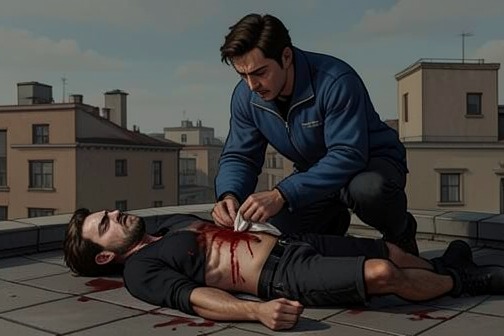
[Julien treats the injured Nemrod](entity:event-recall-event-nemrod-4e0d228e85ad) in a rooftop emergency that turns a chance encounter into an act of care, and then into the first step toward a consequential bond. Newly arrived in [Montréal](entity:location-recall-location-montr-al-91e28a4ed696) and isolated, [Julien](entity:character-recall-character-julien-eb70bac9aae1) finds [Nemrod](entity:character-recall-character-nemrod-96bb79993989) gravely out of place in the winter night: striking in appearance, but wounded and bleeding green. His nursing training gives him a practical way to respond to a scene that resists ordinary explanation.
## Rooftop Encounter and Emergency Care
A sound interrupts Julien’s thoughts on the rooftop. When he turns, he is startled by the man standing behind him, whose bare torso and dark, disordered hair initially hold his attention. The encounter’s glamour gives way to danger as Nemrod steps forward, groaning, and green fluid runs from his torso onto the roof. Julien then notices the wounds along Nemrod’s flanks. Nemrod identifies the substance as blood, but its unnatural color leaves Julien aware that the stranger has not explained everything.
Nemrod soon buckles and falls headfirst. Julien catches him before he hits the ground; Nemrod lands against him, confused, with his head resting on Julien’s chest. Attraction briefly competes with the emergency, but Julien recognizes that Nemrod needs attention and that, as someone trained in nursing, he has a duty to help. In the freezing night, he carries Nemrod into his apartment and lays him on the bed.
Julien draws on his nursing-school experience rather than waiting for an explanation of the green blood. He retrieves sterile compresses and gauze from his medical kit, returns to the bedroom, and cleans the wounds while trying not to be distracted by Nemrod’s appearance. The injuries on either side of Nemrod’s rib cage prove shallow enough that they do not require stitches. Julien dresses them with broad bandages instead, completing the immediate treatment through a careful, practical response to an extraordinary injury.
## Care Becomes a Bond
The bandages turn Julien’s improvised nursing into something Nemrod recognizes as more than temporary aid. After waking, Nemrod approaches unexpectedly, wraps both arms around Julien’s back, and pulls him close. The gesture shifts the scene from the practical distance of caregiver and patient to intimate physical contact: Nemrod’s warmth sends a thrill through Julien, who is already struggling to separate concern for the injured man from attraction to him.
Nemrod then declares Julien his and says he has marked him. The claim is made through a bodily act rather than through an explanation Julien can fully understand. Nemrod uses his own semen to mark Julien, then leans in to smell him; Julien returns the gesture, recognizing scent as another way Nemrod asserts possession. The sequence makes the change in their relationship physical and sensory before it is fully intelligible to Julien. Nemrod’s attention to the bandages links this claim directly to the care Julien has provided: he touches Julien’s cheek and calls him his companion because Julien looked after him.
Julien accepts the new designation emotionally even while its meaning remains unclear. He wants to belong to Nemrod, and Nemrod’s gentle kiss reinforces a bond that has moved rapidly from emergency care to an asserted partnership. Later, once Julien learns that Nemrod is fighting to lead a united pack of werewolves and jaguar-garous, this private attachment acquires political stakes. Julien decides to help Nemrod win the clan war, extending the rooftop rescue into a commitment to stand beside him.
## The Rescue’s Consequences
The treatment later changes how Julien reads a hospital assignment. Asked to give a patient morphine in room 639, he takes a sterile needle upstairs and finds a blond man covered in bites and bruises. The patient’s jaguar tattoo resembles Nemrod’s, though it lacks the wolf; the chart identifies him as [Sam Stanton](entity:character-recall-character-sam-stanton-5ec9647a2ccb), 27, found in the street after a suspected fall that he has not confirmed. Julien recognizes him as the jaguar-garou Nemrod had thrown from a balcony, now back in human form. The rooftop injuries Julien had tended were therefore part of a wider conflict, not an isolated accident.
Julien’s nursing knowledge, first used to clean and bandage Nemrod, now gives him the means to threaten Sam. He exchanges the prescribed syringe for one containing potassium chloride, which can stop the body if too much enters the system, and uses the threat of an injection to demand Nemrod’s whereabouts. Sam tells him that Nemrod usually stays in the alpha cave in Jarry Park. The scene reverses the ethical meaning of Julien’s clinical competence: knowledge deployed to preserve a stranger’s life becomes leverage against an injured patient, under the pressure of loyalty and anger over Nemrod’s attack.
The rescue’s consequence is thus larger than Nemrod’s immediate recovery. Julien’s care creates the personal bond that makes Nemrod’s danger matter to him, while the later hospital encounter draws that bond into Nemrod’s struggle for leadership. The same practical competence that made Julien useful on the rooftop helps carry him from private caregiver to active participant in the conflict surrounding Nemrod.
## Narrative Significance
The rescue binds together three kinds of recognition without making them simultaneous: Julien first sees Nemrod as an astonishing stranger, then responds to the visible injury as a nurse, and only afterward learns that the care has become part of a supernatural and political relationship. The green blood marks the limit of what Julien can explain medically, while his decision to act rests on familiar nursing practice. Later, the hospital scene reveals how far the bond has carried him: faced with the man who attacked Nemrod, Julien turns medical knowledge toward coercion and chooses loyalty over the ordinary duties of his workplace. What begins as an improvised response to a wounded man therefore becomes the hinge between Julien’s isolated new life in Montréal and his decision to enter Nemrod’s conflict.
Event 3
Nemrod marks Julien as his companion
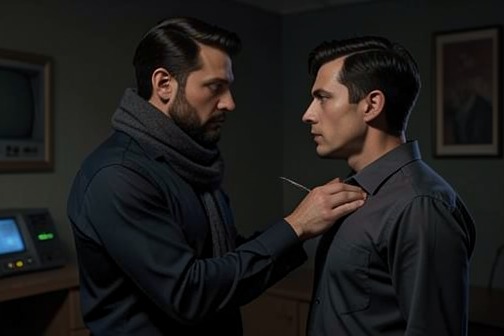
[Nemrod marks Julien as his companion](entity:event-recall-event-nemrod-3900d4dec00d) in a scene where attraction and care become a bodily claim. The encounter gives [Julien](entity:character-recall-character-julien-eb70bac9aae1), newly arrived and profoundly lonely in [Montréal](entity:location-recall-location-montr-al-91e28a4ed696), a powerful sense of belonging, while introducing a bond whose meaning reaches beyond the intimacy he initially understands.
## Background and Recognition
Julien has moved from Orlando to Montréal hoping to begin again, but the change of city has not relieved his isolation. A week after arriving, unable to speak French well and longing for affection rather than a night out, he seeks connection through a gay dating site. His meeting with [Tyler](entity:character-recall-character-tyler-ea3bef659768) leaves him feeling rejected: their conversation had seemed easy, but Tyler cuts their planned afternoon short. Against this backdrop of repeated romantic disappointment, Julien’s encounter with [Nemrod](entity:character-recall-character-nemrod-96bb79993989) carries the force of an unexpected reversal.
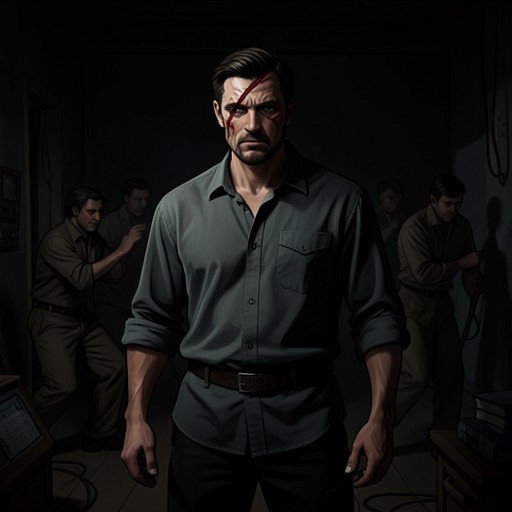
Nemrod first appears to Julien as a strikingly masculine, physically imposing man: broad-shouldered and muscular, with a scarred face and visible injuries that suggest he has been fighting. Julien reads those marks as signs of a formidable alpha male. The attraction is immediate, but the encounter is also shaped by care: Nemrod is wounded, and Julien tends to him. When Nemrod looks at Julien and murmurs his thanks, he moves close, wraps his arms around him, and kisses him. The kiss changes the scene from a caretaker’s anxious attention to a physical intimacy that Julien experiences as thrilling and unprecedented.
## The Mark and Its Meaning
After the kiss, Nemrod turns intimacy into an explicit claim. He takes the semi-liquid semen from Julien’s chest, turns him over, removes his trousers, and forcefully inserts a semen-coated finger into his anus. Julien responds with a surprised moan that is also one of pleasure. Nemrod declares that Julien is his now and that he has marked him; Julien repeats that he belongs to Nemrod, aroused even as he scarcely understands the significance of what he is saying. The scene makes the mark at once physical and verbal: Nemrod names an act of possession, and Julien echoes the language of belonging.
Julien interprets the gesture through the masculine, territorial authority he has already associated with Nemrod. To him, Nemrod’s use of his own semen to claim him seems like an emphatically alpha-male act, and Julien says he wants to belong to Nemrod. Yet the claim is not conveyed through speech and sex alone. Nemrod leans in to scent him, and Julien, initially unsettled, recognizes this as another way of possessing him and scents Nemrod in return. The exchange makes recognition reciprocal, while the citrus-and-spice scent becomes an enduring trace of their encounter in Julien’s memory.
The language of companionship follows this bodily claim and ties it to the care that preceded it. Looking at the bandages on his flanks, Nemrod gently touches Julien’s cheek and says that Julien took good care of him and is now his companion. He kisses him softly, shifting from forceful marking to tenderness without withdrawing the claim. Julien admits that he does not know what Nemrod means by companion, but says he would become one without hesitation. His sudden, half-absurd speculation about whether Nemrod wants children with him—and how that could be biologically possible—registers the gap between the bond’s implications and Julien’s understanding. He finds the whole exchange strange, but also feels it awaken something instinctive: he wants Nemrod to make love to him.
For Julien, then, the marking is both an erotic encounter and a sudden offer of attachment after loneliness and rejection. The episode does not establish that he understands the social or supernatural rules behind the word companion; instead, it shows him accepting the identity on desire and trust before he can explain it. That distinction matters as the bond expands beyond the private encounter: after learning that Nemrod is fighting to lead a united pack of werewolves and jaguar-garous, Julien decides to help him win the clan war. The declaration of belonging thus anticipates a commitment that will draw Julien into Nemrod’s dangerous public struggle.
## The Bond Enters the Clan War
The encounter’s private language of protection and possession soon acquires a public danger. Julien witnesses Nemrod transform into a werewolf and fight a [Jaguar-garou](entity:creature-recall-creature-jaguar-garou-72e3c87fcbe1). The sight brings him excitement and fear together: he is anxious for Nemrod, yet thrilled to see him fight to protect Julien’s honor and safety. The masculine authority Julien had first inferred from Nemrod’s scars and injuries now appears as action, and the companion bond becomes inseparable from the risk of being defended by him.
After the fight, Nemrod explains that Tyler is a Jaguar-garou pursuing him and that the man thrown from the building was one of Tyler’s henchmen. Nemrod is struggling to become leader of a united pack of werewolves and Jaguar-garous, and he apologizes for involving Julien, acknowledging that the conflict puts him in danger. Later, at the hospital, Julien recognizes the injured [Sam Stanton](entity:character-recall-character-sam-stanton-5ec9647a2ccb) as the Jaguar-garou who has returned to human form. He exchanges a syringe for one containing potassium chloride, a substance used in euthanasia, intending to force Sam to reveal where Nemrod can be found. The companion claim thus extends beyond erotic belonging: Julien’s attachment draws him toward Nemrod’s political struggle and into actions carrying grave consequences.
## Decision and Unresolved Ending
Watching two lovers walk hand in hand, Julien settles on what love should require: unconditional support for the person one loves. He decides to go to Nemrod and help him win the clan war. The choice turns the companion bond from a private declaration into a deliberate commitment: Julien will take the side of the man who has claimed him, even though Nemrod has warned that the conflict puts him in danger.
The decision gives Julien a direction beyond the loneliness and romantic rejection that had framed his arrival in Montréal, but it does not resolve the danger or the political struggle. The narrative ends with Julien on his way toward Nemrod, not with their reunion or the war’s outcome. His resolve is captured in the thought that he is coming; the promise closes the encounter while leaving its consequences ahead.
Event 4
Nemrod’s balcony battle with a jaguar-garou henchman

[Nemrod’s balcony battle with a jaguar-garou henchman](entity:event-recall-event-nemrod-87f7003c0ee2) is the event that ruptures [Julien](entity:character-recall-character-julien-eb70bac9aae1)’s private awakening into the hidden world of shapeshifter conflict. The attack exposes [Nemrod](entity:character-recall-character-nemrod-96bb79993989) as a werewolf, identifies [Tyler](entity:character-recall-character-tyler-ea3bef659768)’s connection to the assault, and converts Nemrod’s promise of protection into a political crisis in which Julien is placed at risk and ultimately chooses to support Nemrod’s clan war.
## Causes and Immediate Context
The battle follows an intimate encounter in which Nemrod and Julien establish a bodily and emotional bond. Nemrod has approached Julien unexpectedly, embraced him, and used sexual contact, scent, and a declaration of companionship to claim a relationship. He flairs Julien by smell, and Julien reciprocates, registering Nemrod’s citrus-and-spice scent as unforgettable. Nemrod then touches Julien’s cheek, points to the care shown by the bandages on his flanks, and tells him, "You are my companion now." Julien does not yet understand the full meaning of the term, but willingly accepts the bond.
That intimacy is interrupted by a scratching sound at the bedroom window. Nemrod immediately recognizes the danger and orders Julien to retreat. The warning matters because the approaching creature is not an ordinary dog, cat, or wild wolf but a genuine yellow jaguar with enormous eyes, a mouth full of sharp teeth, and an agile, athletic body. Earlier, Julien had already noticed that Nemrod’s wounds looked as though they had been inflicted by a wild animal, perhaps a dog or wolf; the balcony assault supplies the missing context for those injuries and foreshadows the larger conflict surrounding him.
## Transformation and Course of the Fight
A gust of wind throws open the curtains and allows moonlight to fill the room. Nemrod rises to his full height, revealing himself as considerably taller than Julien’s imagined measurement of more than 1.90 meters. His low growl no longer sounds human. Under the full moon, the man Julien knows as the handsome stallion who made him his companion changes into a wolf before Julien’s eyes: his limbs become wolf legs, his hands and feet become paws, his body lengthens until he lands on all fours, and his mouth becomes an animal’s muzzle while his eyes turn into the dark pupils of a wild wolf.
Nemrod’s transformation makes the threat legible in the same animal language as the attack. He howls fiercely, and the jaguar answers with a roar. For a moment, the two animals hold their ground, neither yielding territory. The standoff ends when Nemrod rises onto his hind legs and leaps at the window, shattering it into countless pieces. The fight then moves across the opening and onto the balcony, where wolf and jaguar exchange blows and evade one another. The contest is initially balanced, leaving Julien caught between excitement at the spectacle and fear for Nemrod’s safety.
The emotional force of the confrontation is inseparable from Julien’s interpretation of masculine power. He is aroused by seeing Nemrod fight as an alpha male, even an alpha wolf, and understands the struggle as a primal defense of his honor and security. The battle therefore functions simultaneously as an assault, a territorial contest, and a demonstration of the protective authority Nemrod has assumed within their new relationship.
## Reversal and Outcome
The jaguar briefly gains the advantage by forcing Nemrod to the ground and pressing its paws against his throat. Julien desperately searches for something with which to knock the animal unconscious, but no improvised intervention is needed. Nemrod escapes the hold and, with a skillful blow, throws the feline over the balcony. The jaguar falls several meters, not from a height likely to kill it, but enough to leave it probably injured.
The immediate outcome is thus a defensive victory rather than a final elimination of the enemy. Julien locks the door, rushes onto the balcony, and finds Nemrod lying on the ground. Nemrod gradually resumes human form, and his eyes recover their hazel color. The return to humanity does not erase the violence of the scene; instead, it leaves Julien facing the wounded man behind the wolf and forces the supernatural truth into the space of their personal relationship.
## Revelation of the Clan Conflict
After the fight, Nemrod explains that Tyler is pursuing him and that the creature thrown from the building was one of Tyler’s henchmen. He further reveals that he is fighting to become the leader of a united clan of werewolves and jaguars-garous. This disclosure explains the jaguar-and-wolf tattoo on his forearm, which had previously appeared as an isolated and puzzling detail. The balcony is therefore not merely the site of a random animal attack: it is a frontline in a succession struggle involving rival shapeshifter groups.
Nemrod also acknowledges that Julien has been drawn into the conflict and that his involvement places him in danger. The admission changes the meaning of Nemrod’s earlier claim. Being a companion is not only an erotic or affectionate status; it is a social and political attachment that makes Julien part of Nemrod’s exposed sphere of allegiance. The protection displayed in the fight carries a cost, because the act of defending Julien also confirms Julien as a target.
## Consequences and Narrative Significance
The battle completes Julien’s passage from isolated newcomer to participant in Nemrod’s world. Julien had moved from Orlando to [Montréal](entity:location-recall-location-montr-al-91e28a4ed696) to escape the routine of a miserable nursing life, and his loneliness was intensified by limited French, repeated romantic rejection, and the absence of dependable affection. The attack interrupts that pattern with a relationship that is physically overwhelming, but it also reveals that the desired belonging comes with danger, hierarchy, and collective obligations.
The event also establishes the story’s recurring translation of animal behavior into intimacy and authority. Scent marks recognition and possession; the wolf and jaguar embody rival claims to territory; and the fight turns alpha masculinity into both protection and political legitimacy. Yet the scene does not end with Julien withdrawing from the threat. After observing lovers walking hand in hand, he decides that love means supporting the person one loves unconditionally. He resolves to help Nemrod win the clan war. The balcony battle therefore transforms fear into commitment: its final consequence is not Julien’s escape from Nemrod’s dangerous world, but his conscious decision to enter it.
Event 5
Julien decides to join Nemrod’s clan war
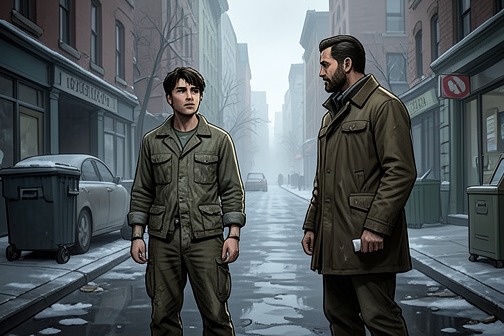
[Julien decides to join Nemrod’s clan war](entity:event-recall-event-nemrod-2852d8d6f1ed) at the moment when separation becomes intolerable and love acquires a political cost. [Nemrod](entity:character-recall-character-nemrod-96bb79993989)’s departure is meant to protect him, but [Julien](entity:character-recall-character-julien-eb70bac9aae1) interprets the bond between them as a reason to act rather than remain safe and abandoned. The decision changes Julien from a lonely newcomer seeking affection into someone prepared to pursue danger, confront an enemy, and participate in the struggle that defines Nemrod’s future.
## Causes and Background
Julien’s choice grows out of a prolonged condition of isolation. Originally from Orlando, Florida, he recently moved to [Montréal](entity:location-recall-location-montr-al-91e28a4ed696) to escape the routine of a poorly paid nursing life and begin again. After only a week in the city, he was struggling with loneliness and with limited French, having completed only two intermediate university semesters. Repeated romantic rejection intensified that alienation: even before meeting Nemrod, Julien described the pattern of disappointing encounters as something that had followed him from Orlando to Montréal and had left him exhausted.
Nemrod’s arrival interrupts that pattern with an intimacy Julien experiences as a decisive recovery of feeling. Nemrod approaches him unexpectedly, embraces him, and later marks him as his own companion through a bodily ritual involving semen, scent, touch, and explicit claims of possession. Nemrod says that Julien belongs to him and identifies him as his companion after Julien has cared for his injuries. Julien does not fully understand the social meaning of the designation, but he embraces it immediately. The bond therefore precedes the political decision: Julien’s willingness to enter the clan struggle is rooted in a relationship already presented as physical, emotional, and socially binding.
## The Separation and Its Reversal
Nemrod leaves Julien a letter explaining that remaining nearby would expose him to danger. He says that Julien’s kindness in caring for him has made him important, but that any harm to Julien would be unbearable. Nemrod also states that he is engaged in a political conflict to become clan leader and promises to return for Julien if he succeeds. The letter frames departure as protection, yet it also reveals that Nemrod’s position is inseparable from risk, succession, and the wider conflict surrounding him.
For Julien, the letter produces the opposite of its intended effect. Nemrod’s kiss has revived a passion that had been dormant and made Julien feel alive after a period dominated by loneliness and suicidal thoughts. Rather than accepting the role of someone left behind, Julien declares that he wants to support his man and refuses to wait until Nemrod has already become leader. His resolve is not presented as calm strategic planning; it is an emotional reversal in which separation converts longing into pursuit.
## The Decision in the Hospital
Julien’s first concrete step toward the war occurs in the hospital, where he discovers that [Sam Stanton](entity:character-recall-character-sam-stanton-5ec9647a2ccb), the injured blond patient, is the jaguar-garou who was thrown from a balcony by Nemrod. The discovery connects Nemrod’s private relationship with Julien to the violent rivalry between supernatural factions. Sam’s injuries may be superficial, but his presence makes the clan struggle tangible within Julien’s own workplace and gives Julien a possible route to Nemrod’s whereabouts.
Julien then crosses an ethical boundary by exchanging Sam’s syringe for one filled with potassium chloride, a substance used in euthanasia and capable of stopping the body when administered in excess. He uses his clinical knowledge not to heal but to create a credible threat. Waking Sam by throwing water into his face, Julien offers him a choice: disclose where Nemrod has gone or face the syringe. Under pressure, Sam says that Nemrod usually stays in his lair, the alpha’s cave, in Jarry Park. The episode turns Julien’s professional identity into an instrument of coercion. His nursing knowledge remains precise and practical, but its purpose has been redirected by loyalty and anger.
## Stakes of the Clan War
The information Julien obtains confirms that Nemrod’s conflict is not merely a personal feud. Nemrod explains that [Tyler](entity:character-recall-character-tyler-ea3bef659768) the jaguar is pursuing him and that the man thrown from the building was one of Tyler’s henchmen. He is fighting to become the leader of a united pack of werewolves and jaguars-garous, a political project that places succession, alliance, and species conflict at the center of the relationship. The jaguar-and-wolf tattoo on Nemrod’s forearm becomes a visible sign of this larger struggle.
Nemrod recognizes that his political position endangers Julien and apologizes for involving him. Julien nevertheless treats the danger as part of what it means to love Nemrod. Watching lovers walk hand in hand beneath the fading winter light over Montréal, he arrives at a principle: love means supporting the beloved unconditionally. The scene places ordinary public tenderness beside the hidden violence of the supernatural conflict. Julien’s decision is thus both romantic and ideological. He chooses not simply to recover Nemrod, but to help him win the war for clan leadership.
## Consequences and Significance
Julien’s final commitment is expressed as an immediate departure from passivity. He announces that he will find Nemrod and help him win the clan war, even though he does not yet know where Nemrod has gone. His last address to Nemrod, announcing his arrival, gives the decision the force of a vow while leaving its practical consequences unresolved. The narrative ends at the threshold of pursuit rather than victory, so Julien’s participation is a chosen course of action, not an accomplished military result.
The event completes a movement from exclusion to belonging, but the new belonging is dangerous. Julien began as an isolated migrant whose language barrier and repeated rejection made Montréal feel physically painful. Through Nemrod, he receives a marked identity as companion; through the separation, he discovers that this identity demands loyalty beyond private intimacy. His choice also reveals the unstable relation between care and control in the story: Nemrod tries to protect Julien by deciding that he must leave, while Julien asserts agency by following him into the danger Nemrod wanted to contain. The clan war consequently becomes the arena in which Julien tests whether the bond that saved him from emotional emptiness can also determine the life he is willing to risk.